
July 31, 2026
How the Brain Helps Us Hear Sound From All Around
Dogs and cats swivel their ears toward sound — humans lost that ability 25 million years ago. New research shows the brain quietly took over the job, and why that matters for hearing loss.

Cutest thing ever, right? That is, when a dog or cat’s ears physically turn toward the direction of a sound when it occurs. Truth be told, this is how many different types of mammals actively hear.
Speaking of mammals, now imagine if humans did that—feel free to laugh; it’s not something we normally see. That’s because people lost their ability to do this about 25 million years ago. However, a recent study reveals that our brain has since taken charge to make up for this long-lost ability.
Curious to learn more? Let’s explore this study behind today’s hearing fact, its results, and how hearing technology can help us maintain hearing from every direction.
Researchers study brain’s electrical activity during movement
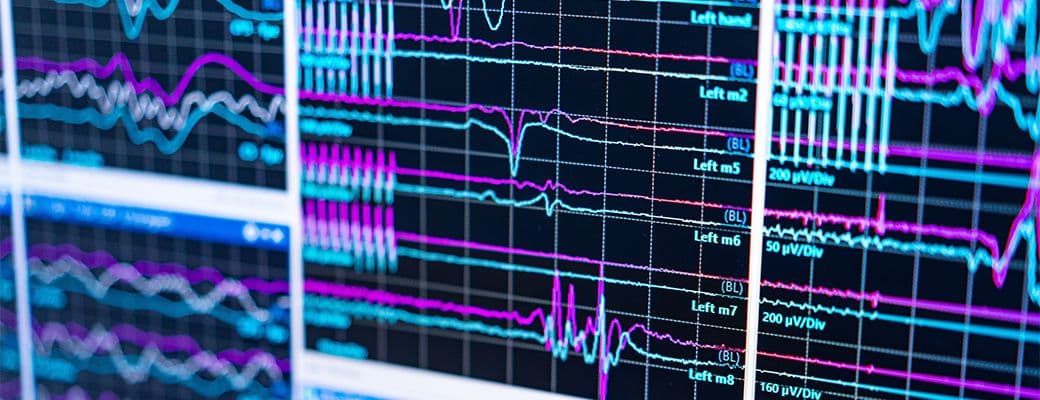
The study involved volunteers wearing electroencephalogram (EEG) sensors (which record the brain’s electrical activity) and motion sensors. They were then asked to walk in a figure-eight-shaped path while listening to nonstop sound coming from their headphones.
As the walking commenced, the researchers observed a noticeable “boost” in participants’ sound processing. When they began to turn, the brain adapted even more strongly while “prioritizing” sounds in the direction of the turn. As they continued down the path, researchers found that the brain’s focus “switched sides” with each turn, “as if panning from one stereo speaker to another, or physically turning an ear towards the sound.”
These results suggest that humans have an internal form of ear swiveling, that—according to researcher Liyu Cao of Zhejiang University—may show a biological adjustment that evolved over time, to keep us safe.
He adds in a New Scientist article, “This might allow for faster reaction times and safer navigation in dynamic environments.”
Moreover, the study uncovers that, as opposed to other mammals whose ears physically pivot in the direction of sounds, our brain is replacing this lost ability by choosing the direction it wants us to hear most intently.
Hearing technology can help us maintain directionality
As shown in the research, directionality is a natural process within hearing that helps keep us aware of our surroundings. Hearing loss, however, impacts this by reducing our ability to hear sound in different directions. This has the potential to affect our overall safety and spatial awareness (or our ability to understand our body’s orientation in relation to our surroundings).
For example, research has shown that untreated hearing loss is linked to a 3X higher risk of falls and an increased risk of accidental injury.
On the bright side, treating our hearing loss through hearing aids can effectively help us maintain awareness of our surroundings at every turn.
Let’s take Starkey’s Omega AI hearing aids, for example. These innovative devices are designed with a built-in directionality system that uses AI intelligence to intuitively detect speech, background, and motion, and adjust accordingly.
What this means for us, is that we:
- Maintain our awareness by hearing key environmental sounds and the start of speech more clearly.
- Understand speech in noise with greater clarity, helping us stay engaged in conversations.
- Hear as we go—our hearing seamlessly adapts as we move through different listening environments (room to room, situation to situation).
So, in the end, we can navigate different listening situations with a genuine sense of connection and clarity—without compromising on spatial awareness. And the ripple effect, of course, is that we can more easily maintain our independence and overall well-being as we age.

Seeing a professional—the right direction for better hearing
If you think you have hearing loss, know that maintaining your best hearing in every direction may be easier than you think.
Hearing care professionals can evaluate your hearing—and if it turns out you do have hearing loss, they can help you find the best solution for your individual needs. Find out what noises you may be missing! Schedule an appointment today for a hearing consultation.
Ready to take the next step?
Schedule a free hearing evaluation at a Livingston location near you.